
Every step you take requires a complex, synchronised chain of motion across your lower body. From the deep socket of your hip down to the fine joints of your foot, your lower limbs absorb massive forces while propelling you forward during walking, running, and jumping. However, because these joints work as an interconnected kinetic chain, an unresolved issue in one area can rapidly trigger a domino effect of compensation and pain throughout the entire leg.
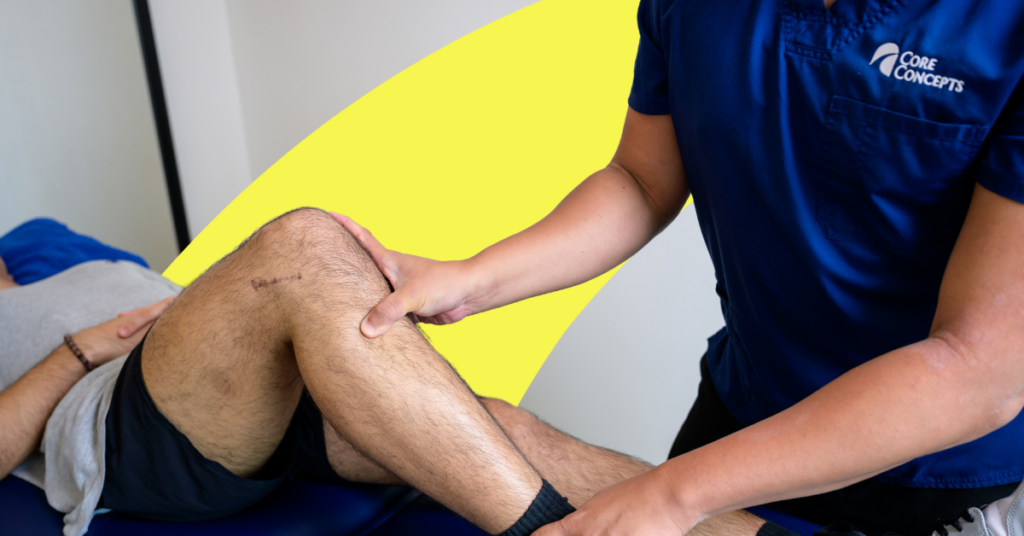
To secure permanent lower limb pain relief, long-term recovery depends on moving past short-term symptom management. It requires an understanding of how lower body biomechanics interact and an evaluation of the root alignment faults driving the strain. This comprehensive pillar article treats the lower limb as an integrated network, consolidating the complete clinical frameworks, pathomechanics, and specialised condition pathways from Core Concepts to help you understand lower extremity pain, identify specific hip, knee, and ankle injuries, and discover how a multi-disciplinary treatment approach can restore your mobility.
1. The Kinetic Chain: How Your Hip, Knee, and Ankle Interact
Musculoskeletal specialists view the lower body not as isolated parts, but as a continuous kinetic chain. Your joints must act like an efficient physical sponge to reduce and distribute the ground reaction forces that travel up from the floor with every foot strike. If one link in this chain loses stability or flexibility, the adjacent joints are forced to over-work to keep your movements balanced.
A prime example of this interaction is seen in the long-term effects of a neglected ankle injury. Many individuals treat a twisted ankle as a minor, temporary issue that resolves once the swelling goes down. However, without proper rehabilitation, the ligaments remain loose and the ankle becomes weak and unstable. To protect the vulnerable ankle during high-impact tasks like running or jumping, the brain unconsciously alters your movement patterns. The knee is forced to straighten prematurely to offload the ankle, which shifts excessive force directly into the knee joint capsule, increasing the risk of ligament tears or cartilage wear. Furthermore, studies show that individuals with chronic ankle instability rely heavily on their hips for balance. This constant reliance forces the hip stabilizers to work overtime, resulting in muscle fatigue, alignment shifts, and painful overuse injuries like Greater Trochanteric Pain Syndrome or lower back aches.
2. Comprehensive Directory of Lower Limb Conditions We Treat
Lower extremity pain typically stems from specific structural loading issues or repetitive micro-trauma. Our clinical directories classify these conditions into four primary anatomical classifications:
The Hip & Pelvic Complex
The hip is a deep, stable ball-and-socket joint that serves as the primary power generator of the lower body. Biomechanical issues across this segment are usually caused by an uncorrected pelvis tilt or weak gluteal tracking, which forces surrounding tissues to absorb excessive shear stress.
- Hip Osteoarthritis & Wear: A progressive, degenerative condition characterised by the gradual breakdown of the protective cartilage lining the hip’s ball-and-socket joint. This friction results in deep, dull groin pain, a reduced range of motion, and localised stiffness that makes putting on socks or getting out of a car increasingly difficult.
- Greater Trochanteric Pain Syndrome (Gluteal Tendinopathy / Hip Bursitis): An overuse injury causing localised pain and tenderness on the outside of the hip. It occurs when the fluid-filled sac (bursa) or the overlapping gluteal tendons become inflamed due to poor pelvic tracking or repetitive friction, making it painful to walk, run, or sleep on your side.
- Piriformis Syndrome (Pseudo-Sciatica): Sufferers feel a shooting pain traveling down the back of their leg and often worry they have a slipped disc. However, as detailed in our clinical article on leg pain vs slipped disc, this radiating discomfort can stem from a deep hip issue. If the piriformis muscle becomes excessively tight, it directly compresses the adjacent sciatic nerve, closely mimicking a disc bulge.
The Knee Joint Region
The knee is a mechanical “hinge” joint caught directly in the middle of the kinetic chain. It is highly vulnerable to tracking injuries and ligament strains when the hip above lacks stability or the foot below collapses into over-pronation. Here are some common conditions that cause knee pain
- Runner’s Knee (Anterior Knee Pain / PFPS): Sufferers feel a vague, persistent ache underneath or around the kneecap that is consistently triggered by running or squatting. As explored in our insight article on anterior knee pain in runners, this is heavily driven by tracking issues where the kneecap pulls laterally out of its optimal groove.
- Runner’s ITB Syndrome & The “Stiff Pelvis”: This condition causes a sharp, localized burning sensation on the outside of the knee. Our research into runners’ ITB syndrome and the stiff pelvis reveals that over-striding patterns lock pelvic rotation, forcing the ITB to contract continuously and rub painfully against the knee joint.
- Hoffa’s Fat Pad Syndrome: An alternative anterior knee issue highlighted in our clinical piece on knee pain fat pad irritation or Hoffa’s syndrome. Chronic knee hyperextension (often caused by an uncorrected forward pelvic tilt) pinches and severely inflames the sensitive fluid cushion located immediately beneath the kneecap.
- Patellar Tendinitis (Jumper’s Knee): An overuse injury characterised by localised inflammation or structural breakdown of the patellar tendon, which connects the kneecap to the shinbone. It is highly prevalent in jumping and sprinting sports, manifesting as sharp pain during activity and a persistent, dull ache immediately afterward.
- Knee Ligament & Meniscus Tears: Sprains or complete tears within the structural ligaments (ACL, MCL) or shock-absorbing cartilage crescents of the knee, usually caused by sudden changes of direction or pivoting movements during contact sports.
The Ankle Joint Complex
The ankle complex provides structural mobility, surface adaptation, and balance. When an acute sprain is neglected, it leads to chronic ankle instability, forcing the knee and hip to alter their mechanics to absorb ground impact forces. Here are some common conditions that cause ankle and foot pain
- Inversion Ankle Sprains: Tearing or overstretching of the lateral ligaments on the outside of the ankle, usually caused by rolling the ankle inward during sports or stepping on an uneven surface. It results in acute bruising, swelling, and difficulty bearing weight.
- Chronic Ankle Instability: Loose ligaments and poor coordination following a neglected historical sprain, which alters movement patterns across the lower body and shifts excessive structural load further up the kinetic chain.
- Achilles Tendinopathy: Repetitive micro-trauma, stiff calf tissues, and progressive loading faults within the Achilles tendon. Our clinical advice on running after Achilles tendinopathy outlines the critical progression models needed to return safely to high-impact conditioning.
The Foot Segment
The foot acts as the primary mechanical foundation for your body. If the structural arches fail to control impact forces correctly, it can lead to severe local soft-tissue tension and refer alignment issues further up the leg.
- Plantar Fasciitis: An overuse injury of the thick band of tissue (plantar fascia) supporting the foot arch. It causes a sharp, stabbing pain on the underside of the heel, which is notoriously severe during the first few steps in the morning or after resting.
- Foot Over-Pronation (Flat Feet): The physical collapse of the inner foot arch on impact. When left unmanaged, over-pronation forces the entire leg to twist inward, placing unnatural torque on the knee and hip joints during long walks or runs.
3. The Core Concepts 4-Step Treatment Process
At Core Concepts, we look beyond the surface area of discomfort to identify the true underlying cause of your lower extremity issue. Our multi-disciplinary team uses a clear, structured 4-step treatment process to guide you back to long-term joint health.
[ Step 1: Immediate Relief ] ➔ [ Step 2: Resolve the Root ] ➔ [ Step 3: Functional Restoration ] ➔ [ Step 4: Stay Better ]
Step 1: Immediate Pain Relief (Getting Better)
During the acute stage of a lower limb injury, the primary goal is to manage inflammation, reduce painful muscle guarding, and safely restore basic movement. Your physiotherapist performs precise movement tests and differential diagnostics to pinpoint the irritated tissues while ruling out severe structural damage. Treatment during this phase focuses on gentle, hands-on manual therapy, light joint mobilization, and targeted soft tissue techniques to calm the nervous system. Clinical modalities like ultrasound, localized cryotherapy, or specialized kinesiotherapy taping are deployed to offload irritated joints and break the acute pain cycle.
Step 2: Resolving the Underlying Cause
Once your sharp pain settles, we look deeper to fix the structural errors that caused the tissue breakdown in the first place. Treating a painful knee or heel in isolation is rarely successful if alignment faults elsewhere in the leg are ignored. Your physiotherapist will evaluate your entire lower kinetic chain, checking for muscle imbalances, restricted hip rotation, or flat arches. If uncorrected foot mechanics are driving your knee or hip pain, your therapist may recommend custom foot orthotics or structured footwear adjustments to provide a balanced foundation for your body.
Step 3: Functional Restoration and Stability Training
Long-term joint health relies on training your muscles to absorb forces automatically. In this phase, treatment focuses on rebuilding the strength, balance, and endurance of your leg muscles. Your rehabilitation will incorporate progressive load training—such as single-leg balance drills, eccentric calf raises, and split squats—to retrain your glutes, hamstrings, and quadriceps to control joint alignment dynamically during movement.
Step 4: Long-Term Prevention (Stay Better)
To ensure your lower limb pain does not return, your care transitions into advanced functional conditioning and specialised movement training, such as Clinical Pilates. Guided by certified instructors, Clinical Pilates modifies traditional exercises to fit your specific lower body structure. It focuses on pelvic stability, hip joint tracking, and proper alignment through the knee and ankle. By optimising your running form, exercise habits, and daily postures, your lower limbs remain strong, resilient, and prepared for the physical demands of your career and active lifestyle.
4. Critical Medical Safeguards: Lower Limb Red Flags
While the vast majority of lower extremity issues are mechanical and respond exceptionally well to physiotherapy, certain clinical signs indicate a serious medical condition that requires immediate specialist attention. Seek urgent medical care if you experience any of the following symptoms:
- A sudden, unexplained swelling accompanied by a deep, throbbing ache and noticeable heat or redness in the calf of one leg (potential signs of a Deep Vein Thrombosis).
- An immediate, complete inability to bear any weight on your foot or leg following a sudden fall, twist, or impact injury.
- A sudden loss of sensation or a cold, pale appearance in your foot or leg, accompanied by a weak or absent pulse.
- Severe joint pain accompanied by an unexplained high fever, chills, visible joint redness, or sudden pus discharge.
5. Take the First Step toward Active, Pain-Free Movement
Persistent hip deep aches, recurring knee pain, and unstable ankles do not have to be an accepted cost of an active lifestyle. By accurately identifying the underlying mechanical drivers of your discomfort and working through a structured, personalized rehabilitation program, you can break free from the cycle of chronic pain and move with confidence.
If you are ready to move past short-term fixes and find a lasting solution for your joint health, scheduling a comprehensive lower limb evaluation with a physiotherapist is your most effective next step.
