
Neck pain is one of the most widespread musculoskeletal complaints in modern society, heavily affecting professionals, athletes, and students alike. In Singapore’s highly digitised, desk-bound workforce, persistent neck stiffness and discomfort have become an everyday reality. Clinical data suggests that up to 70% of individuals will experience neck pain severe enough to interfere with their daily activities at some point in their lives.
To secure permanent neck pain relief, long-term recovery depends on moving past surface-level treatments like pain relief patches or temporary massages. It requires a precise understanding of the structural components of the cervical spine and an evaluation of the faulty movement habits driving the irritation. This comprehensive pillar article consolidates the complete clinical frameworks, postural mechanics, and specialised condition pathways from Core Concepts to help you understand neck pain, identify specific cervical conditions, and discover how a multi-disciplinary treatment approach can help you live pain-free.
1. Understanding Your Cervical Spine: Anatomy and Postural Leverage
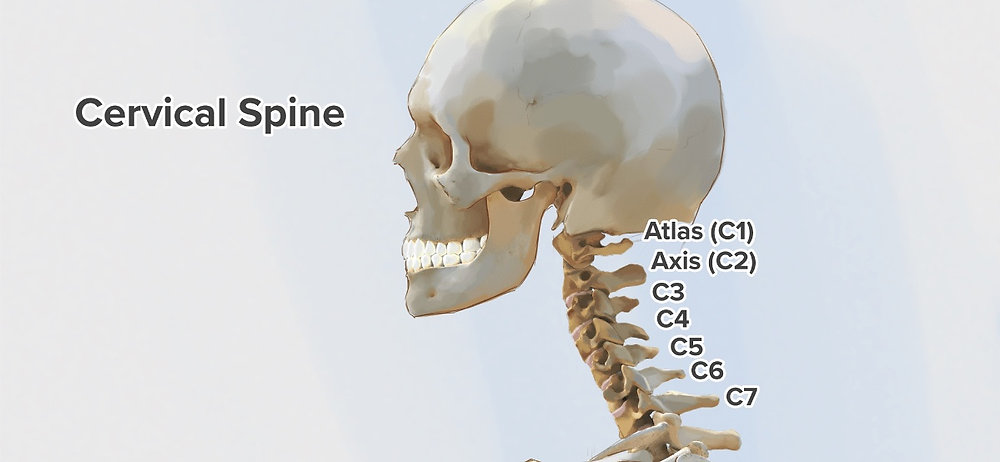
Your neck—or cervical spine—is a complex mechanical marvel. It consists of seven small, highly mobile vertebrae (C1 to C7) separated by shock-absorbing intervertebral discs. This structure is supported by an intricate network of ligaments and muscles working together to hold up the weight of your head while allowing you to turn, tilt, and look around smoothly.
The primary issue with the cervical spine is its vulnerability to poor mechanical leverage. On average, the human head weighs between 4.5 to 5.5 kilograms when held in perfect, neutral vertical alignment. However, for every 2.5 centimetres your head tilts forward over your chest, its effective weight on the supporting structures of the neck doubles. When you crane your head forward to read a monitor or look down at a smartphone, your neck muscles and joints are forced to hold up a load equivalent to nearly 27 kilograms. Over time, this intense mechanical overload causes microscopic tissue damage, joint wear, and nerve compression.
Mechanical vs. Non-Mechanical Neck Pain
Musculoskeletal specialists categorize neck pain into two primary clinical groups:
- Mechanical Neck Pain: This accounts for the vast majority of cases seen in clinical practice. It includes localised discomfort arising from minor structural adaptations, facet joint irritation, muscle fatigue, or ligament strain caused by static physical positions, sudden movements, or repetitive strain.
- Non-Mechanical Neck Pain: A much smaller group of conditions where the pain is not driven by movement or alignment. This includes referred pain from cardiovascular issues, systemic inflammatory joint diseases, or local infections that require direct medical or surgical intervention.
2. Comprehensive Directory of Neck Pain Conditions We Treat
Persistent neck issues typically track back to specific underlying structural or mechanical pathologies. Our clinical articles break these conditions down into several core diagnostic categories:
Nerve Compression & Radiating Disc Conditions
- Cervical Slipped Disc / Herniated Disc: Much like the lower back, the shock-absorbing discs in the neck can wear down over time. Chronic postural stress or sudden trauma can cause the tough outer edge of a cervical disc to tear, allowing its soft inner gel to push outward. This protrusion can directly press against or chemically irritate nearby cervical nerve roots, causing intense neck pain alongside radiating neurological symptoms down the arm.
- Cervical Radiculopathy (Pinched Nerve in Neck): This condition occurs when a nerve root exiting the cervical spine becomes compressed or trapped. This entrapment can be caused by a herniated disc, a narrowed spinal pathway, or a bony outgrowth. It triggers localized numbness, a persistent “pins and needles” sensation, or muscle weakness that radiates through the shoulder blade, down the arm, and into the fingers.
- Brachial Plexus Injury / Thoracic Outlet Syndrome (TOS): A complex nerve condition where the bundle of nerves running from your lower neck into your arm (the brachial plexus) becomes compressed or irritated. This compression often happens in the narrow spaces beneath the collarbone or between tight neck muscles (the scalenes), causing diffuse pain, swelling, a feeling of coldness, or numbness throughout the arm and hand.
Degenerative & Structural Joint Variations
- Cervical Spondylosis (Neck Osteoarthritis): An age-related wear-and-tear condition that causes gradual degeneration of the joints and bones in the neck. As cervical discs naturally dry out and shrink, the spaces between the vertebrae narrow, placing extra pressure on the small facet joints. The body responds by forming protective bone spurs (osteophytes), which leads to chronic neck stiffness, a grating sensation during movement, and a deep, dull ache that worsens with inactivity.
- Whiplash and Traumatic Injuries: A common soft-tissue injury resulting from a sudden, violent acceleration-deceleration force that throws the head backward and forward unexpectedly (most frequently during rear-end car collisions or contact sports). This rapid movement overstretches and tears the ligaments, muscles, and joint capsules of the neck, causing severe pain, restricted movement, dizziness, and cervicogenic headaches.
Postural, Environmental & Muscular Conditions
- Text Neck & Postural Muscle Strains: A modern mechanical condition caused by spending hours looking down at mobile phones, tablets, or poorly positioned laptops. This sustained forward-bend posture forces the upper back and neck muscles to stay tightly contracted, leading to painful muscle fatigue, localised trigger points, and burning pain across the top of the shoulders.
- Acute Wry Neck (Torticollis): A sudden, painful condition where an individual wakes up with their head locked, tilted to one side, and twisted away from the painful area. It is typically caused by a minor facet joint displacement or a severe muscle spasm in the neck, often triggered by sleeping in an awkward position, exposure to a cold draft, or a sudden uncoordinated movement.
3. Insights from Our Clinical Blog: Specialized Neck & Head Pain Conditions
Our clinical teams regularly publish detailed analyses of complex neck conditions on the Core Concepts blog. Three of the most common and interesting postural complaints include:
Cervicogenic Headaches & The “Poke Chin” Mechanism
Many patients are surprised to learn that their chronic headaches actually originate from mechanical issues in their upper neck joints. This condition is known as a Cervicogenic Headache. Sufferers typically experience a deep, dull ache that starts at the base of the skull and wraps over one side of the head toward the forehead, temple, or behind the eye. It can also cause a feeling of pressure in the jaw.
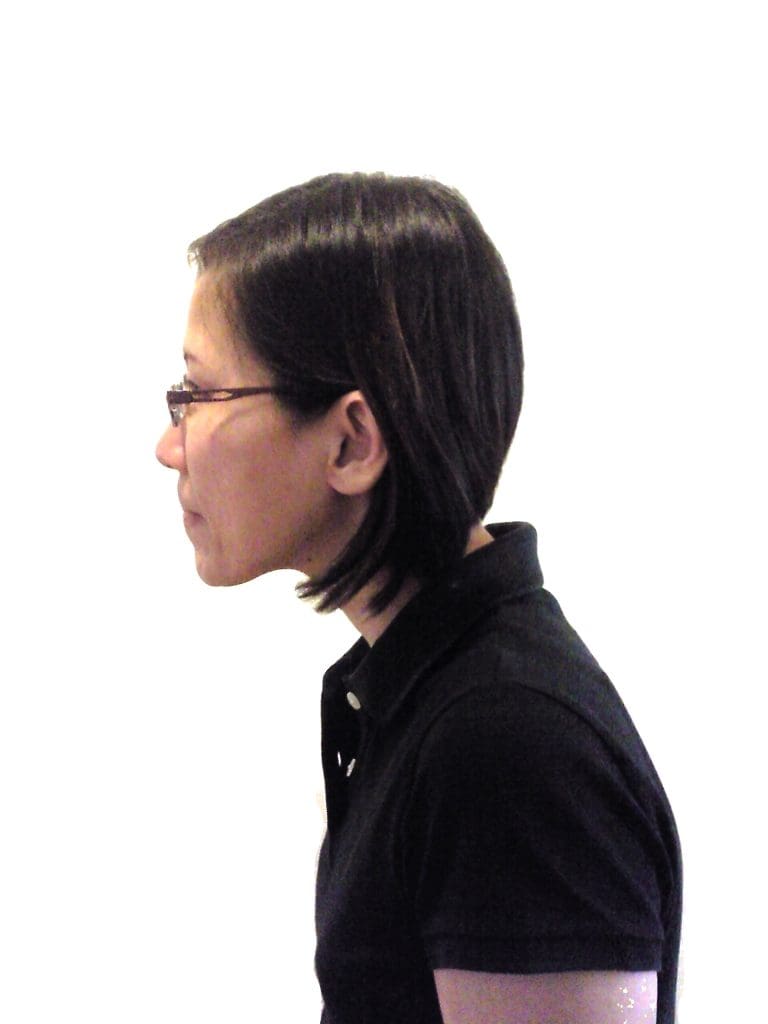
This condition is consistently aggravated by activities that force the neck into a sustained, strained position—such as working on a laptop, reading in bed, or applying makeup. The primary driver is the “poke chin” forward head posture. When you project your chin forward, you apply massive compressive stress directly to the upper part of the cervical spine, specifically the C1 and C2 vertebral levels. Because the majority of head rotation and nodding occurs at these top two levels, maintaining this posture causes the joint cartilage to degenerate and wear out over time, leading to severe stiffness.
The nerves exiting the C1, C2, and C3 levels supply sensation to the back of the skull up to the top of the head. When these upper joints become stiff, compressed, or misaligned due to muscle tightness, these nerve pathways become irritated. Because the nerves on the right side of the neck only supply the right side of the head, a right-sided upper neck restriction will always refer pain to the right side of the head. Physiotherapists resolve this issue by using techniques like the Muscle Energy Technique (MET) to realign the joints, followed by passive mobilisation to restore natural movement and permanently relieve the headache.
Distinguishing Cervicogenic Headaches from Other Types
Because head pain can stem from many different sources, our clinical experts emphasise the importance of distinguishing types of headaches to ensure you receive the correct treatment. Unlike migraines—which cause severe, throbbing pain, nausea, and sensitivity to light or sound—or classic tension headaches that create a steady, band-like pressure across both sides of the forehead, a true cervicogenic headache is highly localised to one side and can be directly triggered by pressing on the soft tissue immediately under the base of your skull.
The “Weekend Warrior” Cycling Neck Strain
Another common issue discussed on our blog is neck strain from recreational sports, particularly cycling neck pain and headaches. Cyclists spend long periods in a continuously flexed, hunched-forward riding posture. To see the road ahead, they must hyperextend their neck backward while their upper back is rounded forward.
This sustained hyperextension forces the neck muscles to work overtime to stabilize the head, leading to joint irritation and throbbing tension headaches after a long ride. To manage this mechanical issue, our team recommends raising the bicycle’s handlebars to reduce the sharp extension curve in the neck, taking regular breaks to sit upright and relax the neck muscles during long rides, and performing side-bending stretching exercises before and after a cycling session.
4. Functional Classifications of Cervical Movement Disorders
When neck pain persists for several months without resolving, it can lead to chronic movement limitations. To provide effective, targeted care, our clinical teams use advanced biomechanical classification models to group non-specific neck pain into clear functional types:
Directional Mobility Restriction
In this group, patients show a clear loss of normal movement in one specific direction—most frequently during neck extension (looking upward) or rotation (turning the head to check blind spots). This restriction is usually caused by chronic shortening of the deep neck muscles or a localized mechanical block within the facet joints. Patients often attempt to compensate for this tightness by excessively moving their upper back or shoulders, which can lead to secondary strain elsewhere.
Cervical Altered Motor Control
This disorder is characterized by a loss of deep muscular coordination rather than a simple lack of flexibility. The small, deep stabilizing muscles of the neck (such as the longus colli) fail to fire automatically to support the spine. As a result, large, superficial muscles like the sternocleidomastoid (SCM) and upper trapezius are forced to over-work to keep the head steady. This muscle imbalance leads to chronic fatigue, generalized burning aches across the shoulders, and a constant feeling of tightness that stretching alone fails to resolve.
5. The Core Concepts 4-Step Treatment Process
At Core Concepts, we look beyond the surface area of discomfort to identify the true underlying cause of your issue. Our multi-disciplinary team uses a clear, structured 4-step treatment process to guide you back to long-term spinal health.
[ Step 1: Immediate Relief ] ➔ [ Step 2: Resolve the Root ] ➔ [ Step 3: Functional Restoration ] ➔ [ Step 4: Stay Better ]
Step 1: Immediate Pain Relief (Getting Better)
During the acute stage of a neck injury or flare-up, the primary clinical focus is to settle local inflammation, reduce painful muscle guarding, and restore basic movement. Your physiotherapist will perform precise differential movement tests to identify your specific pain triggers while safely ruling out serious structural complications. Initial treatment focuses on gentle, hands-on manual therapy, including soft tissue mobilization and light joint mobilization to naturally calm the nervous system and block pain signals. Depending on your presentation, clinical modalities like targeted spinal traction (to open up narrowed pathways and relieve compressed nerve roots), ultrasound, or specialized heat therapies are used to break the painful muscle spasm cycle.
Step 2: Resolving the Underlying Cause
Once acute pain settles, we look deeper to fix the underlying mechanical errors that caused the tissue breakdown in the first place. Treating the neck in isolation is rarely successful if issues elsewhere in the body are ignored. Your physiotherapist will assess your entire upper kinetic chain, checking for factors like a rounded upper back (thoracic kyphosis), stiffness in the ribcage, or asymmetrical shoulder blade movement. For chronic, long-standing cases, deep tissue massage and myofascial release are utilised to systematically break down restrictive scar tissue, restoring normal muscle compliance and flexibility.
Step 3: Functional Restoration and Coordination Training
Long-term recovery relies on retraining your muscles to support your spine automatically. In this phase, treatment shifts toward re-activating and building endurance in the deep cervical stabilising muscles. Your therapist will guide you through precise motor-control exercises, such as deep neck flexor activation, to rebuild your spine’s natural protective system. This ensures your neck can handle daily activities without shifting the load onto large, superficial shoulder muscles.
Step 4: Long-Term Prevention (Stay Better)
To ensure your neck pain does not return, your care transitions into advanced functional conditioning and targeted movement training, such as Clinical Pilates. Guided by certified instructors, Clinical Pilates modifies traditional exercises to fit your specific neck anatomy. It focuses on shoulder blade stability, upper back mobility, and optimal head alignment. By improving your daily posture and workspace setup, your spine stays fully mobile, resilient, and prepared for the physical demands of your career and active lifestyle.
6. Critical Medical Safeguards: Cervical Red Flags
While the vast majority of neck issues are mechanical and respond exceptionally well to physiotherapy, certain clinical signs indicate a serious medical condition that requires immediate specialist attention. Seek emergency medical care if your neck pain is accompanied by any of the following symptoms:
- A sudden, progressive loss of coordination in your hands, such as unexpected clumsiness, dropping items frequently, or struggling with fine movements like buttoning a shirt.
- An unstable, heavy, or unpredictable feeling when walking, or a sudden loss of physical balance.
- Constant, severe numbness or a pins-and-needles sensation felt simultaneously in both arms or hands.
- Severe, unremitting neck pain that does not change with rest or position, accompanied by sudden dizziness, double vision, difficulty speaking or swallowing, or unexplained fevers and chills.
7. Take the First Step toward Lasting Comfort
Chronic neck stiffness and shoulder pain do not have to be an accepted cost of a modern career. By accurately identifying the underlying mechanical drivers of your discomfort and working through a structured, personalised rehabilitation program, you can break free from the cycle of recurring pain and tension.
If you are ready to move past short-term fixes and find a lasting solution for your spinal health, scheduling a comprehensive musculoskeletal evaluation with a physiotherapist is your most effective next step.
