
From typing an email and lifting weights at the gym to reaching for a seatbelt, your upper limbs are built for extraordinary mobility, precision, and reach. Because the upper extremity prioritises movement over structural stability, its joints rely heavily on a delicate balance of muscular coordination. When an imbalance or injury occurs anywhere along this network, the body quickly builds up adaptive movement habits, sending strain radiating across the entire arm.
To secure permanent upper limb pain relief, long-term recovery depends on moving past short-term fixes like anti-inflammatory gels or temporary supports. It requires a clear understanding of how upper body biomechanics interact and a thorough clinical evaluation of the root alignment faults driving the tissue strain. This comprehensive pillar article treats the upper extremity as an integrated network, consolidating the clinical frameworks, pathomechanics, and specialised condition pathways from Core Concepts to help you understand upper body pain, identify specific injuries, and discover how a multi-disciplinary treatment approach can restore your function.
1. The Upper Kinetic Chain: The Shoulder-Girdle Foundation
Musculoskeletal specialists view the upper limb as a continuous, highly integrated kinetic chain. Unlike the lower limb, which is anchored firmly inside the deep socket of the pelvis, the upper limb hangs from the torso, connected to the skeleton almost entirely by muscles and ligaments. The true foundation of all arm movement is the shoulder-girdle complex, which includes the shoulder blade (scapula), collarbone (clavicle), and thoracic spine (upper back).
A prime example of this kinetic connection is seen in the development of chronic elbow and wrist strain in office professionals. Many patients seek care for localised forearm pain, assuming the problem is just repetitive mouse clicking. However, a clinical assessment often reveals severe “scapular dyskinesis”—a condition where the shoulder blade fails to slide smoothly across the ribcage due to weak stabilising muscles. When the shoulder blade loses its stability, the anchor point for the entire arm collapses. To compensate and maintain hand positioning at a computer keyboard, the muscles of the elbow and wrist are forced to contract continuously under tension. This ongoing overload leads to micro-tears and chronic tendon inflammation, illustrating that treating the forearm in isolation will rarely provide permanent relief if the shoulder foundation remains uncorrected.
2. Comprehensive Directory of Upper Limb Conditions We Treat
Upper extremity pain typically stems from repetitive micro-trauma, structural impingement, or postural overload. Our clinical directories categorise these conditions into three primary anatomical classifications:
The Shoulder & Scapular Complex
The shoulder joint (glenohumeral joint) provides the greatest range of motion of any joint in the human body. Because its socket is remarkably shallow, it relies entirely on a muscular cuff to hold the arm bone securely in place. Here are some common conditions that can cause shoulder pain:
Rotator Cuff Tendinopathy & Tears
- Rotator Cuff Tendinopathy: Microscopic tearing and gradual degeneration of the four key tendons that stabilise the shoulder joint. Frequently driven by age-related wear or repetitive overhead activities, it leads to a persistent, deep shoulder ache and localised weakness. Pain is typically most acute during overhead movements or when sleeping on the affected side.
- Rotator Cuff Tears: The partial or complete structural detachment of a tendon or labrum within the shoulder joint complex. Often resulting from an acute injury, severe strain, or progressive fraying over time, it causes sudden or severe localised weakness, restricted range of motion, and catching sensations in the joint, alongside severe discomfort when putting pressure on the shoulder at night.
Joint Stiffness & Mobility Restrictions
- Adhesive Capsulitis (Frozen Shoulder): A condition characterised by severe stiffness, progressive loss of motion, and deep joint pain. It is caused by the spontaneous inflammation and thickening of the shoulder joint capsule. It typically develops in distinct phases—freezing, frozen, and thawing—and can significantly restrict all standard arm movements for months.
- Shoulder Osteoarthritis: The progressive breakdown and degeneration of the protective cartilage surface within the glenohumeral (ball-and-socket) joint. This leads to bone-on-bone friction, causing chronic aching, joint stiffness, cracking or grinding noises (crepitus), and a gradual loss of mobility that is often worse in the mornings.
Impingement & Inflammatory Conditions
- Shoulder Impingement Syndrome: Compression and irritation of the rotator cuff tendons or the subacromial bursa as they pass through the narrow space beneath the acromion bone. This occurs during arm elevation, causing a sharp, pinching pain when lifting the arm between 60 and 120 degrees (known as a painful arc).
- Subacromial Bursitis: Severe inflammation of the bursa, the small fluid-filled sac that reduces friction beneath the shoulder blade. Often triggered by repetitive overhead friction or a direct impact, it causes localised swelling, extreme tenderness to the touch, and a sharp, constant ache that worsens when sleeping on the side.
- Calcific Tendonitis: The abnormal buildup of calcium deposits within the rotator cuff tendons, most commonly the supraspinatus tendon. The exact cause is unclear, but it leads to bouts of sudden, agonising shoulder pain and severe movement restrictions when the body attempts to reabsorb the calcium deposit.
Instability & Labral Injuries
- Shoulder Instability & Dislocations: A state where the humeral head (ball) is excessively loose or completely forced out of the glenoid fossa (socket), usually due to acute trauma or hypermobility. This stretches or tears the supporting ligaments, leading to a persistent feeling of apprehension, weakness, and a recurrent risk of the joint slipping out of place.
- SLAP Tears (Superior Labrum Anterior to Posterior): A specific tear to the top part of the labrum—the ring of cartilage that deepens the shoulder socket—where the long head of the biceps tendon attaches. Common in throwing athletes and heavy lifters, it causes a deep, vague ache, decreased throwing power, and painful clicking or popping during overhead actions.
The Elbow Region
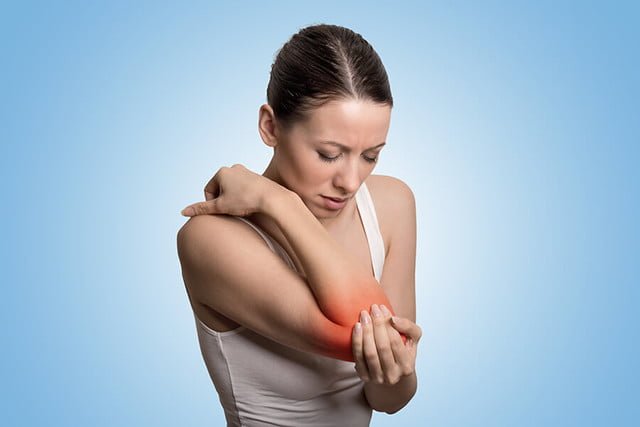
The elbow is a hinge joint designed to position the hand in space. Because it serves as the origin point for the major forearm muscles, it is highly prone to overuse tendon injuries. Here are some common conditions that cause elbow and wrist pain
- Tennis Elbow (Lateral Epicondylalgia): An overuse injury causing pain and tenderness on the outside of the elbow. It is driven by repetitive strain and micro-tears in the extensor tendons, usually resulting from poor wrist ergonomics during typing, lifting, or racquet sports.
- Golfer’s Elbow (Medial Epicondylalgia): Characterised by localised pain on the inside of the elbow joint. This condition stems from repetitive overloading of the flexor tendons, frequently triggered by gripping activities, throwing motions, or heavy typing.
The Wrist & Hand Segment
The wrist and hand contain an intricate network of small bones and tendons designed for high-precision motor control, making them highly vulnerable to nerve entrapment and repetitive strain.
Nerve Compression Syndromes
- Carpal Tunnel Syndrome: A painful nerve compression condition that occurs when the median nerve becomes squeezed as it travels through the narrow carpal tunnel in the wrist. Driven by repetitive wrist flexion, localised swelling, or arthritis, it results in a burning ache, pins-and-needles sensations, and numbness concentrated in the thumb, index, and middle fingers.
Tendon & Sheath Disorders
- De Quervain’s Tenosynovitis: A painful inflammation of the fluid-filled sheaths surrounding the tendons at the base of the thumb. It makes gripping, pinching, or turning the wrist (such as wringing a cloth or opening a jar) intensely painful.
- Trigger Finger (Stenosing Tenosynovitis): A condition where the tendon that flexes the finger becomes inflamed and develops a small nodule, making it difficult to slide smoothly through its protective pulley sheath. This causes the affected finger or thumb to painfully snap, click, or lock in a bent position, requiring manual straightening in severe cases.
- Wrist Tendinopathy (Flexor/Extensor): Irritation and micro-tearing of either the flexor tendons (palm side) or extensor tendons (back side) of the wrist due to repetitive strain or sudden overload. It results in localised swelling, tenderness, and an ache that worsens when performing tasks that resist wrist movement.
Joint & Ligament Injuries
- Wrist Sprains (TFCC or Ligament Tears): A stretch or tear of the ligaments stabilizing the wrist bones, frequently involving the Triangular Fibrocartilage Complex (TFCC) on the pinky side. Usually caused by a fall onto an outstretched hand, it results in localised swelling, deep clicking sounds, and pain when rotating the wrist or bearing weight through the hand.
- Thumb CMC Joint Osteoarthritis: Progressive wear and tear of the cartilage at the carpometacarpal (CMC) joint, located at the base of the thumb where it meets the wrist. It causes a deep, persistent ache at the base of the thumb, a visible bony squaring of the joint over time, and a severe loss of pinch strength during everyday tasks like opening jars or turning keys.
- Hand & Finger Osteoarthritis / Rheumatoid Arthritis: Joint degeneration or autoimmune inflammation affecting the small knuckles of the fingers (PIP and DIP joints). It leads to morning stiffness, pain, swelling, and the gradual development of bony nodules, making fine-motor tasks and gripping difficult.
3. Insights from Our Clinical Blog: Specialised Postural & Nerve Patterns
Our clinical teams regularly publish detailed biomechanical analyses on the Core Concepts blog to explain complex upper body patterns that frequently puzzle patients:
Thoracic Outlet Syndrome & The “Computer Posture”
A frequent topic on our clinical blog is the management of diffuse arm numbness that doesn’t originate from the hand itself. This is often identified as Thoracic Outlet Syndrome (TOS). Sufferers feel a vague, heavy ache accompanied by intermittent tingling or coldness traveling down the entire arm, which is often misdiagnosed as a simple wrist issue.
This condition is heavily driven by modern desk setups. Maintaining a slouched, forward-head “computer posture” for hours forces the pectoral muscles across the chest and the scalene muscles in the neck to shorten and tighten. This chronic tension directly compresses the neurovascular bundle—the major network of nerves and blood vessels running from the neck to the arm—as it passes through the narrow thoracic outlet. Physiotherapists resolve this issue by using manual therapy to release the tight chest structures, combined with upper back extension exercises to decompress the neural pathway safely.
The Biomechanics of Persistent Grip Weakness
Patients often present with an inability to open jars or hold heavy bags, assuming their hand muscles are simply weak. However, our clinical experts highlight that grip strength is heavily dependent on nerve conduction from the C6 and C7 neck levels. A minor cervical disc bulge can easily disrupt these signals, reducing grip power without causing obvious neck pain. This highlights why looking at the entire kinetic chain is vital for a lasting recovery.
4. The Core Concepts 4-Step Treatment Process
At Core Concepts, we look beyond the surface area of discomfort to identify the true underlying cause of your upper limb issue. Our multi-disciplinary team uses a clear, structured 4-step treatment process to guide you back to long-term joint health.
[ Step 1: Immediate Relief ] ➔ [ Step 2: Resolve the Root ] ➔ [ Step 3: Functional Restoration ] ➔ [ Step 4: Stay Better ]
Step 1: Immediate Pain Relief (Getting Better)
During the acute stage of an upper limb injury, the primary goal is to manage inflammation, reduce painful muscle guarding, and safely restore basic movement. Your physiotherapist performs precise movement tests and differential diagnostics to pinpoint the irritated tissues while ruling out severe structural damage. Treatment during this phase focuses on gentle, hands-on manual therapy, light joint mobilisation, and targeted soft tissue techniques to calm the nervous system. Clinical modalities like ultrasound or specialised kinesiotherapy taping are deployed to offload irritated joints and break the acute pain cycle.
Step 2: Resolving the Underlying Cause
Once your sharp pain settles, we look deeper to fix the structural errors that caused the tissue breakdown in the first place. Treating a painful elbow or wrist in isolation is rarely successful if alignment faults elsewhere in the arm are ignored. Your physiotherapist will evaluate your entire upper kinetic chain, checking for muscle imbalances, restricted thoracic rotation, or shoulder blade tracking errors. If uncorrected workspace ergonomics are driving your upper limb pain, your therapist will provide specific modifications for your desk alignment, monitor height, and mouse positioning.
Step 3: Functional Restoration and Stability Training
Long-term joint health relies on training your muscles to stabilize your movements automatically. In this phase, treatment focuses on rebuilding the strength, balance, and endurance of your upper body muscles. Your rehabilitation will incorporate progressive load training—such as rotator cuff strengthening, scapular control drills, and eccentric forearm exercises—to retrain your upper body to control joint alignment dynamically during movement.
Step 4: Long-Term Prevention (Stay Better)
To ensure your upper limb pain does not return, your care transitions into advanced functional conditioning and specialised movement training, such as Functional Training. Guided by certified exercise specialists who train your muscles to work cohesively together and prepare them for daily tasks by simulating the basic common movements you do at home, work or during sports. It focuses on shoulder blade stability, upper back mobility, and optimal head alignment. By optimising your posture, exercise habits, and daily habits, your upper limbs remain strong, resilient, and prepared for the physical demands of your career and active lifestyle.
5. Critical Medical Safeguards: Upper Limb Red Flags
While the vast majority of upper extremity issues are mechanical and respond exceptionally well to physiotherapy, certain clinical signs indicate a serious medical condition that requires immediate specialist attention. Seek urgent medical care if you experience any of the following symptoms:
- Sudden, severe chest pain, breathlessness, or a heavy pressure sensation that radiates directly down the left shoulder and arm (potential signs of a cardiac emergency).
- An immediate, complete inability to move your arm or hand following a sudden fall, impact, or high-velocity injury.
- A sudden onset of uncoordinated arm movements, weakness, or drop attacks where you unexpectedly lose your grip, accompanied by facial drooping or slurred speech.
- Severe joint swelling accompanied by an unexplained high fever, chills, noticeable joint redness, or visible skin changes.
6. Take the First Step toward Active, Pain-Free Movement
Persistent shoulder aches, recurring elbow tension, and numb wrists do not have to be an accepted cost of a modern career or active lifestyle. By accurately identifying the underlying mechanical drivers of your discomfort and working through a structured, personalised rehabilitation program, you can break free from the cycle of chronic pain and move with confidence.
If you are ready to move past short-term fixes and find a lasting solution for your joint health, booking an appointment a comprehensive upper limb evaluation with a physiotherapist is your most effective next step.
