
If lifting a mug, turning a doorknob, or gripping a racket sends a sharp ache through the outer side of your elbow, you might be dealing with tennis elbow.
Despite the name, you do not need to play tennis to get it. While racket sports remain a frequent trigger, the recent surge in paddle and racket games like pickleball has driven a noticeable spike in elbow flare-ups across community courts and sports centres. Repetitive typing, DIY home improvement, carrying heavy loads, or repeated wrist motions at work can just as easily trigger the condition.
Here is what causes lateral elbow pain and what the clinical evidence says about recovering for good.
What Exactly Is Tennis Elbow?
The clinical term for tennis elbow is lateral epicondylalgia. The muscles in your forearm that lift your wrist and fingers attach to a bony bump on the outside of your elbow called the lateral epicondyle. When these forearm tendons face repeated strain without enough recovery, micro-tears and irritation develop. This leads to local tenderness, weakened grip strength, and pain that frequently radiates down the forearm.
What Actually Works? Evidence-Based Treatments
Not all elbow treatments provide equal long-term value. Clinical practice guidelines prioritise conservative, active rehabilitation over passive fixes:
| Treatment Option | How It Works | Evidence Strength |
|---|---|---|
| Supervised Exercise Therapy | Guided eccentric and progressive loading to rebuild tendon capacity. | Strong |
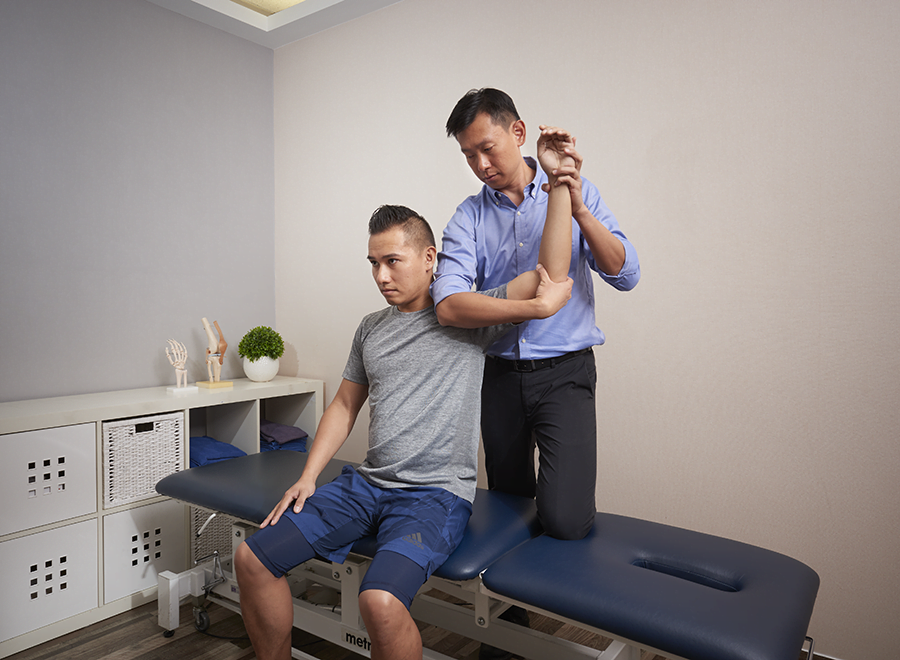
| Manual Therapy | Hands-on joint mobilisations and soft-tissue work to relieve early stiffness. | Moderate |
| Forearm Counterforce Bracing | Straps that disperse mechanical tension away from the tendon insertion point. | Moderate |
| Short-term NSAIDs | Oral anti-inflammatory medication for immediate symptom relief during acute episodes. | Strong (short-term only) |
| Shockwave Therapy (ESWT) | Acoustic sound waves applied to stimulate local blood flow and tissue repair. | Moderate / Mixed |
| Corticosteroid Injections | Rapid inflammation suppression. (Carries risk of symptom recurrence or tendon weakening with repeated use). | Moderate (caution advised) |
3 Essential Steps to Lasting Recovery
1. Modify the Overload (Do Not Just Rest Completely)
Complete rest often causes the tendon to decondition, making it flare up the moment you return to activity. Instead, modify what irritates it:
- Use two hands to lift heavier household items.
- Swap thick or mismatched paddle grips if you play pickleball or tennis.
- Wear a counterforce elbow brace during demanding manual tasks to offload the tendon insertion point.
2. Strengthen Through Progressive Loading
Tendons adapt to load. A physiotherapist will guide you through targeted eccentric strengthening exercises for the wrist extensors. This rebuilds load tolerance so the tendon can handle daily work and sport again without pain.
3. Check Upstream: Shoulder and Grip Mechanics
Elbow pain rarely happens in isolation. Weakness in your shoulder stabilisers, tight thoracic mobility, or poor stroke technique often forces your forearm muscles to overcompensate. Correcting whole-arm mechanics prevents recurrent flare-ups.
When to Seek Professional Physiotherapy
If your elbow pain persists for more than two weeks, interferes with your sleep, or weakens your grip so much that you drop everyday objects, get an assessment. A structured rehabilitation plan addresses the root cause rather than relying on temporary pain relief. Read our comprehensive guide to upper limb pain relief to find out how we can help.
