
VALD Performance Testing & Data-Driven Physiotherapy in Singapore
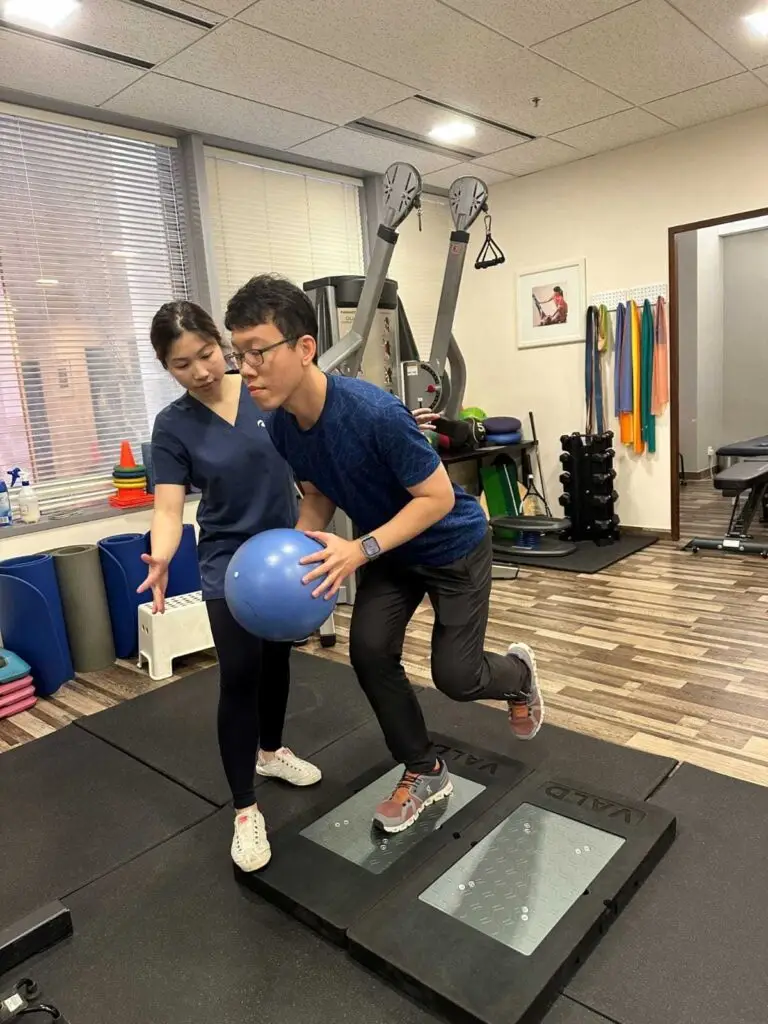
At Core Concepts, we use advanced VALD performance testing technology—trusted by elite sports teams and research institutions worldwide—to accurately measure strength, power, balance, and movement quality.
Whether you are visiting our clinics in Raffles Place, Novena, or Harbourfront, our goal is to provide objective strength assessments that remove the guesswork from your recovery. Unlike traditional “eyeball” assessments, the VALD system uses precise data from force plates and dynamometers to give both therapist and client clear, objective insights into how your body is functioning.
How the VALD System Works
The VALD system is a suite of smart testing tools that captures real-time information about your musculoskeletal health:
ForceDecks (Force Plates): These measure how much force you produce when standing, jumping, or landing. This reveals explosive power, stability, and how evenly you load each side of your body.
DynaMo (Handheld Dynamometers): Portable devices that measure the strength of specific muscle groups with pinpoint accuracy, identifying imbalances that are often invisible during standard exams.
Balance Platforms: These analyze control and stability during movement, which is critical for both high-performance athletes and fall prevention.
Why Objective Data Matters for Your Rehab
In physiotherapy and sports performance training, numbers tell the full story:
Takes the Guesswork Out of Rehab: Instead of relying on how a movement “looks,” VALD provides data. Your therapist knows exactly which muscles are weaker, tighter, or underperforming.
Tracks Progress with Precision: Improvements are measured in kilos, newtons, and percentages. You will see exactly how your strength and symmetry change over time.
Personalizes Treatment and Training: Data allows our specialists to design rehab plans tailored to your specific biometrics, adjusting intensity and load at the perfect pace for your body.
Builds Return-to-Sport Confidence: For athletes, these benchmarks provide the clinical proof needed to know you are truly ready to return to high-impact training or competition safely.
Who is VALD Suitable For?
VALD assessments benefit anyone looking to better understand their body’s mechanics:
Athletes in Singapore: From runners to footballers, VALD testing provides the data needed to fine-tune performance and reduce injury risk.
Rehabilitation Clients: Those recovering from ACL reconstructions, ankle sprains, or back pain benefit from precise tracking of their readiness to return to activity.
Those with Recurring Injuries: If you are stuck in a cycle of re-injury, VALD can uncover the hidden asymmetries holding you back.
Experience Elite-Level Physiotherapy at Core Concepts
Our therapists combine VALD technology with clinical expertise to ensure data translates into meaningful action.
Stop guessing and start measuring. Book your VALD assessment at Core Concepts today and get precise answers on how your body is moving.

Some Frequently Asked Questions
During your session, a therapist will guide you through a series of standardized movements—such as jumps, squats, or specific muscle contractions—using ForceDecks and DynaMo sensors. The system captures thousands of data points per second, which are then instantly translated into an easy-to-read report on your strength, power, and symmetry.
Not at all. While VALD is the gold standard for professional sports teams (like those in the English Premier League and NBA), at Core Concepts, we use it for everyone. Whether you are recovering from a common ankle sprain, managing chronic back pain, or simply want to improve your fitness, objective data helps you get better results faster.
A standard assessment typically takes 15 to 30 minutes, depending on the number of muscle groups being tested. This is usually integrated into a standard physiotherapy consultation so your therapist can immediately use the data to adjust your treatment plan.
This depends on your goals. For rehabilitation, we recommend testing every 4 to 6 weeks to objectively measure your recovery progress. For performance athletes, testing once a month or at the start of a new training block helps ensure you are gaining strength without developing dangerous asymmetries.
