

Dealing with shooting pain that travels from your lower back down to your toes can be both alarming and debilitating. While many people immediately assume they have a “slipped disc,” the cause of sciatica may not always be so simply due to a slipped disc. In this article, we uncover this further.
What is Sciatica?
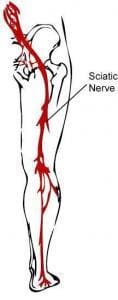
Sciatica is not a medical diagnosis in itself; rather, it is a clinical term used to describe a set of symptoms caused by the compression of the sciatic nerve. As the largest and longest nerve in the human body—measuring nearly 2cm in diameter—it acts as a major highway for both motor (movement) and sensory (feeling) signals between your brain and your legs
When this “highway” is obstructed or compressed, there is a disruption of the transmission of nerve signals down the leg which can lead to sensation of numbness and sometimes motor dysfunctions if severe.
What causes Sciatica?
Because the sciatic nerve travels such a long distance, there are numerous points where it can be pinched or irritated. Identifying the correct cause is vital for effective treatment.
The “Great Mimickers”: Common Causes of Nerve Pain
1. The Classic Herniated (Slipped) Disc
A herniated disc occurs when the soft inner core of a spinal disc protrudes and presses against the nerve roots which is where the sciatic nerve originates from. This is the most common cause of true sciatica.
2. Piriformis Syndrome (The “False” Sciatica)
In many cases, the spine isn’t the problem at all. The piriformis muscle sits directly over the sciatic nerve in your buttock. If this muscle becomes inflamed, tight, or goes into spasm, it can compress on the nerve as well, and hence causing sciatica.
3. Spinal Stenosis
As we age, the spinal canal can narrow due to arthritis or disc degeneration. This narrowing—known as Spinal Stenosis—can compress the nerve root whereby the sciatic nerve originates from, leading to sciatica.
4. Referred Pain from Nearby Structures
Sometimes, what feels like sciatica is actually “referred pain” from other inflamed tissues, such as:
- Sacroiliitis: Inflammation of the sacroiliac (SI) joint where your hip meets your spine.
- Lumbar Facet Joint Syndrome: Irritation in the small joints of the vertebral leading to referral symptoms at the lower leg.
- Iliolumbar Syndrome: A tear or inflammation of the ligaments connecting the spine to the pelvis.
Recognizing the Symptoms
Sciatica rarely feels the same for everyone. Depending on where the nerve is pinched, you may experience:
- Weakness or “foot drop,” where you have difficulty lifting your toes
- Constant pain on only one side of the buttock.
- Sharp, electric-shock sensations that make it difficult to stand up.
- A “burning” or tingling sensation that intensifies when sitting for long periods.
If your leg pain is accompanied by a sudden loss of bowel or bladder control, this is a medical emergency. Please seek immediate evaluation from a neurologist or orthopaedic specialist
Path to Recovery: Treating the Pressure and Inflammation
The goal of sciatica treatment is twofold: reduce inflammation and remove the mechanical pressure on the nerve.
1. Physiotherapy & Manual Therapy
Physiotherapist are skilled in spinal mobilization techniques to reduce the compressive load at specific spinal level and using manual therapy and other modalities to calm the inflamed tissues.
2. Medical Management
Your doctor may prescribe NSAIDs or steroid injections to manage acute inflammation during the healing phase.
3. The “Core” of Prevention
Once the acute pain has resolved, the focus shifts to prevention of recurrence of sciatica. This involves specific exercises depending on where the cause of the mechanical pressure. Often, we focus on strengthening the muscles at the trunk and the back to allow for a better alignment of the spine during movement and static posture.
At Core Concepts Singapore, we specialize in unbinding the mechanical restrictions that keep your nerves under pressure. If you are feeling “tight” or experiencing shooting pains despite regular rest, the issue often resides in a specific structural imbalance rather than a simple muscle ache. By addressing the root cause—whether it’s a disc issue, a tight piriformis, or a joint misalignment—we help you break the cycle of pain and return to a life of fluid, pain-free movement. Read our guide to back pain relief for common back pain conditions and how Core Concepts can help.
